Bhutan
7 days
·
Groups up to 16
Trip at a Glance
Starts
Paro, Bhutan (2,235 m /7,332 ft)
Ends
Paro, Bhutan (2,235 m /7,332 ft)
Highest altitude
3,120 m (10,235 ft), Tiger’s Nest Monastery
Trip style
Private, Comfort, Active
Difficulty
Moderate
Accommodation
Mid-range boutique hotels
Meals
Three meals a day ( 6 Breakfasts, 6 lunches, and 6 dinners)
Activities
Cultural tours, day walks and hikes, and at least a long day of drive.
Transport
Private van or coach.
Best season
April to May, September to November
Guides
Local certified guide
Trip Introduction
A 7-day trip through Paro, Thimphu and Punakha, Bhutan's former capital, with two nights in each and a mix of dzongs, temples and day hikes. You'll visit Paro Rinpung Dzong, Buddha Dordenma and Punakha Dzong, walk through rice fields up to Khamsum Yulley Namgyal Chorten, and finish with the hike to Tiger's Nest.
Day-by-Day Itinerary
Day 1 – Arrive in Paro – Paro Sightseeing – Scenic Drive to Thimphu
Morning : Arrival in Paro and Paro Sightseeing
Welcome to Bhutan! Upon arrival at Paro International Airport, meet your Far & High Bhutanese guide and driver with the traditional greeting, “Kuzu Zangpo La”, a warm welcome to the Kingdom of Bhutan.
After completing arrival formalities, begin your 7 - Day Bhutan Cultural Tour with a visit to Paro’s Bird’s Eye View Point, where you can take in sweeping views across the Paro Valley and surrounding mountains. It is a wonderful first introduction to Bhutan’s dramatic landscape and traditional architecture.
Continue to the Ta Dzong National Museum, housed in a historic watchtower overlooking the valley. The museum provides an introduction to Bhutanese history, culture, religious traditions, art, and craftsmanship through its collection of artifacts and exhibits.
From Ta Dzong, walk downhill to Paro Rinpung Dzong, one of the valley’s most impressive architectural landmarks. The dzong, with its massive whitewashed walls, traditional woodwork, courtyards, and religious institutions, offers an excellent introduction to Bhutanese dzong architecture and the country's living Buddhist heritage. Bhutan’s Department of Tourism notes that Rinpung Dzong is a distinctive fortress overlooking Paro and visible from throughout the valley.
Afternoon : Scenic Drive from Paro to Thimphu
After lunch, leave Paro for Thimphu, Bhutan’s capital. The drive follows the winding valley road through beautiful Himalayan scenery, with opportunities to stop for photographs along the way.
En route, stop at Tamchog Lhakhang, a small but historically significant temple associated with Thangtong Gyalpo, the renowned Tibetan saint and bridge builder. Continue to Chuzom, the confluence where the Paro and Thimphu rivers meet. This scenic junction is a popular stop for photographs and offers a glimpse of the changing landscape as you travel toward the capital.
Arrive in Thimphu, check in to your deluxe hotel, and take some time to refresh.
Evening : Leisurely Stroll in Thimphu
Later in the afternoon or early evening, enjoy a relaxed stroll through Thimphu town. Take in the atmosphere of Bhutan’s capital, browse local shops, and observe everyday Bhutanese life at an easy pace. Thimphu combines modern urban life with traditional architecture, Buddhist landmarks, and a strong connection to Bhutanese culture.
Return to the hotel for dinner and overnight.
Far & High Tip:When visiting Bhutanese dzongs, temples, and other religious sites, dress respectfully. Clothing that covers the shoulders and knees is appropriate and appreciated. Avoid shorts, short skirts, sleeveless tops, and revealing clothing when visiting religious sites. Hats and caps should also be removed inside sacred places. Shoes may need to be removed before entering temples, and photography inside sacred sites may be restricted.
Day 1 Summary
Altitude: Paro – 2,250 m (7,380 ft); Thimphu – 2,330 m (7,650 ft)
Distance traveled: Approximately 65 km / 40 miles
Driving time: Approximately 2–3 hours, excluding sightseeing and photo stops
Key attractions: Paro Bird’s Eye View Point, Ta Dzong National Museum, Paro Rinpung Dzong, Tamchog Lhakhang, and Chuzom Confluence
Meals: Lunch and dinner
Overnight: Thimphu Deluxe Hotel
Day 2 – Thimphu Cultural Sightseeing – Wangditse Hike – Tashicho Dzong
Morning : Thimphu’s Cultural and Spiritual Highlights
Today, we explore Thimphu, Bhutan’s capital and an important highlight of your 7-Day Bhutan Cultural Tour. We begin with a visit to the impressive Buddha Dordenma Statue, perched on a hill overlooking the Thimphu Valley. The enormous gilded Buddha offers panoramic views of the capital and surrounding mountains. The site is also an important Buddhist pilgrimage destination, with numerous smaller Buddha statues housed within the monument.
Continue to the Memorial Chorten, one of Thimphu’s most recognizable religious landmarks. Built in memory of the Third King of Bhutan, Jigme Dorji Wangchuck, the chorten is an important place of daily worship. Join local devotees as they circumambulate the monument, turning prayer wheels and offering prayers.
Next, visit Simply Bhutan, a living museum that introduces visitors to Bhutanese culture and traditions through demonstrations, exhibits, architecture, and interactions with local performers. It provides an engaging glimpse into traditional Bhutanese life, from clothing and customs to music, dance, and everyday practices.
After the morning sightseeing, enjoy lunch at a local restaurant.
Afternoon : Takin Reserve and Wangditse Hike
After lunch, drive to the Motithang Takin Preserve, home to Bhutan’s national animal, the takin. The preserve provides an opportunity to see these unusual Himalayan mammals in a natural forested setting while learning about Bhutan’s efforts to protect its unique wildlife.
Continue to the trailhead for the Wangditse hike, a scenic walk through pine and rhododendron forests above Thimphu. The trail provides beautiful views across the Thimphu Valley and surrounding mountains, while offering a chance to experience Bhutan beyond its roads and monuments.
The hike is generally moderate and can be enjoyed at a relaxed pace, with time to appreciate the forest, mountain scenery, prayer flags, and occasional views back toward the capital. Depending on trail conditions and the group's pace, allow approximately 2–3 hours for the hike.
The walk concludes around Dechen Phodrang, a historic monastic complex overlooking Thimphu. Once associated with the original site of Thimphu's Tashichho Dzong, Dechen Phodrang today serves as a monastic school and is known for its collection of important Buddhist paintings, statues, and religious artifacts.
Late Afternoon : Tashichho Dzong
Continue to Tashichho Dzong, the impressive fortress-monastery that serves as the seat of Bhutan’s government and the central monastic body during the summer months. Set beside the Wang Chhu River, the dzong is particularly striking in the late afternoon when its whitewashed walls and traditional architecture are illuminated by the changing light.
Take time to appreciate the dzong's elaborate woodwork, courtyards, golden details, and traditional Bhutanese architecture before returning to your hotel.
Dinner and overnight in Thimphu.
Far & High Tip: The Wangditse trail is a great opportunity to experience Bhutan’s natural landscape without committing to a full-day trek. Wear comfortable walking shoes and carry a light jacket, water, and rain protection. Weather in the hills can change quickly, particularly during the summer and monsoon months.
Day 2 Summary
Altitude: Thimphu – approximately 2,330 m (7,650 ft); Wangditse – approximately 2,600 m (8,530 ft)
Distance traveled: Approximately 20–25 km / 12–16 miles by vehicle, plus approximately 5–6 km / 3–4 miles of hiking
Driving time: Approximately 1–1.5 hours total, excluding sightseeing stops
Hiking: Wangditse to Dechen Phodrang – approximately 2–3 hours at a relaxed pace
Key attractions/Activities: Buddha Dordenma, Memorial Chorten, Simply Bhutan, Motithang Takin Preserve, Wangditse Goemba Hike, Dechen Phodrang, and Tashichho Dzong
Meals: Breakfast, lunch, and dinner
Overnight: Thimphu Deluxe Hotel
Day 3 – Thimphu to Punakha – Dochula Pass – Punakha Sightseeing
Morning : Scenic Drive to Punakha
After breakfast, leave Thimphu and travel east toward Punakha, the former capital of Bhutan and one of the country's most scenic valleys. The road climbs gradually through pine and rhododendron forests toward Dochula Pass, at approximately 3,100 m (10,170 ft).
On a clear day, Dochula offers spectacular views of the snow-capped Himalayan peaks, including some of Bhutan’s highest mountains. The pass is also home to the 108 Druk Wangyal Chortens, built on a hilltop surrounded by forest and mountain scenery.
If your 7-Day Bhutan Cultural Tour takes place during the spring rhododendron season, make a seasonal stop at Lamperi Botanical Park. The park is particularly attractive from spring through early summer, when its forest trails and hillsides come alive with blooming rhododendrons. Bhutan is home to numerous rhododendron species, making this an excellent opportunity for nature and photography enthusiasts.
Continue the scenic descent toward the warmer Punakha Valley, where the landscape changes noticeably from the higher mountain environment around Thimphu.
Afternoon : Punakha Dzong and Suspension Bridge
Arrive in Punakha, check in at Zhingkham Resort, and take some time to refresh before continuing your sightseeing.
Visit the magnificent Punakha Dzong, dramatically situated at the confluence of the Pho Chhu (Male River) and Mo Chhu (Female River). One of Bhutan's most celebrated architectural landmarks, the dzong is renowned for its imposing whitewashed walls, intricate woodwork, ornate interiors, and beautiful courtyards. It also holds deep historical and religious significance and served as Bhutan's seat of government until the capital was moved to Thimphu.
From the dzong, walk across the nearby Punakha Suspension Bridge, one of Bhutan's longest traditional suspension bridges. Decorated with colorful prayer flags and spanning the Mo Chhu River, the bridge provides wonderful views of the river, surrounding hills, and Punakha Valley.
Late Afternoon : Chimi Lhakhang
Continue to the countryside around Sopsokha to visit Chimi Lhakhang, a small hilltop temple associated with the revered Bhutanese saint Drukpa Kunley, popularly known as the Divine Madman.
The walk to the temple passes through a traditional village landscape surrounded by rice fields and farmhouses, offering a glimpse of rural Bhutanese life. The temple is an important pilgrimage site and is particularly associated with fertility blessings.
Return to Zhingkham Resort after sightseeing.
Enjoy dinner and overnight in Punakha.
Far & High Tip: If your trip falls during the spring flowering season, allow some flexibility in your schedule for Lamperi Botanical Park. Rhododendron blooming times vary with elevation and weather, so the exact flowering display cannot be guaranteed. Comfortable walking shoes are recommended for the trails and the walk to Chimi Lhakhang.
Day 3 Summary
Altitude: Thimphu – approximately 2,330 m (7,650 ft); Dochula Pass – approximately 3,100 m (10,170 ft); Punakha – approximately 1,200 m (3,940 ft)
Distance traveled: Approximately 75 km / 47 miles
Driving time: Approximately 3–4 hours, excluding sightseeing and photo stops
Key attractions & activities: Scenic drive from Thimphu to Punakha, Dochula Pass and 108 Druk Wangyal Chortens, seasonal rhododendron viewing at Lamperi Botanical Park, Punakha Dzong, Punakha Suspension Bridge, countryside walk to Chimi Lhakhang, and exploration of rural Bhutanese landscapes
Meals: Breakfast, lunch, and dinner
Overnight: Zhingkham Resort, Punakha
Day 4 – Punakha Villages – Khamsum Yulley Namgyal Chorten – Optional Extended Hike to Giligang
Morning : Rural Punakha and Ritsha Village
After breakfast, spend another day exploring the cultural landscapes and scenic countryside of the Punakha Valley. Today offers a choice between exploring the valley by vehicle or experiencing it on foot with a hike to Khamsum Yulley Namgyal Chorten and, for those seeking a longer adventure, continuing onward to Giligang Temple.
Begin with a visit to Ritsha Village, a traditional rice-growing settlement known for its fertile fields and houses built on mud and stone foundations. The village offers an authentic glimpse into rural Bhutanese life, with homes surrounded by vegetable gardens and fruit-bearing plants such as oranges, lemons, squash, and papayas.
As you stroll through the village, observe how local farmers are combining traditional agricultural practices with modern equipment, including mechanized power tillers. Take time to chat with friendly villagers, learn about their daily lives, and see their traditional dwellings.
Late Morning : Khamsum Yulley Namgyal Chorten Hike
Continue to the trailhead for the scenic hike to Khamsum Yulley Namgyal Chorten, beautifully situated on a hill overlooking the Punakha Valley.
Cross the Mo Chhu River by a suspension bridge and follow a pleasant trail through rice paddies before gradually climbing through the forested hillside. The ascent to the chorten generally takes around 45–60 minutes, depending on your pace, while the descent typically takes less than 30 minutes.
Built by the Queen Mother, Ashi Tshering Yangdon Wangchuck, the four-story chorten is an outstanding example of Bhutanese traditional architecture. Its hilltop setting provides beautiful views across the rice fields, river, surrounding temples, and forested hills.
Afternoon : Extended Hike to Giligang Temple
If you would like a longer hike, you can continue beyond Khamsum Yuelley along the mountain trail toward Giligang Temple. This extended route is planned in advance so that a picnic lunch can be arranged and your driver can meet you at the appropriate pickup point later in the day.
The trail climbs through the forested mountainside and rewards hikers with increasingly expansive views of the Punakha Valley. Giligang - the 300-year-old privately owned temple has traditionally been cared for by the same family for generations. Along the trail, there are numerous opportunities to stop and enjoy views of temples, rice paddies, rolling hills, and green forests.
Enjoy a picnic lunch along the route or near Giligang Temple, with the opportunity, depending on circumstances, to meet the temple's caretakers and learn more about this privately maintained sacred site.
From Giligang, the trail continues downhill along the mountainside toward Changyul Bridge, where you meet your driver for the transfer back to the hotel. The complete extended route is a strenuous but rewarding hiking experience and requires good walking fitness.
Cultural & Village Exploration Option
For travelers who prefer not to take the extended hike, return from Khamsum Yulley Namgyal Chorten and continue exploring Punakha by vehicle. Visit Talo Village, where traditional houses, agricultural landscapes, and village life provide a glimpse into rural Bhutanese culture. You may also visit Daly Gomba and spend time observing or interacting with the resident monks, subject to the monastery's schedule and local customs.
If your visit falls on a weekend, you can also visit the Saturday market at Kuruthang or the Sunday market in Wangdue Phodrang, depending on the day's schedule.
Return to Zhingkham Resort for dinner and overnight.
Far & High Tip: If you would like to take the extended Giligang hike, let us know when planning your itinerary. Because the route continues well beyond Khamsum Yulley Namgyal Chorten, we need to plan the picnic lunch, hiking time, and vehicle pickup at Changyul Bridge in advance. The extended hike is considerably more strenuous than the regular Khamsum Yulley Chorten hike and is best suited to travelers comfortable with several hours of uphill and downhill walking.
Day 4 Summary
Altitude: Punakha Valley – approximately 1,200 m (3,940 ft); Khamsum Yulley Namgyal Chorten – approximately 1,500 m (4,920 ft)
Distance traveled: Varies depending on the selected sightseeing and hiking option
Driving time: Varies according to the selected route and activities
Hiking: Khamsum Yulley Chorten – approximately 1.5–2 hours round trip; extended Giligang route – approximately 5–6 hours, depending on pace and stops
Key attractions & activities: Ritsha Village, rural Punakha and rice fields, Mo Chhu Suspension Bridge, Khamsum Yulley Namgyal Chorten, optional extended hike to Giligang Temple, picnic lunch, Rinchengang and Talo villages, Daly Gomba, weekend markets, etc.
Meals: Breakfast, lunch, and dinner
Overnight: Zhingkham Resort, Punakha
Day 5 – Punakha to Paro – Dochula Pass – Dzongdrakha Monastery
Morning : Scenic Drive from Punakha to Paro
After breakfast, leave Punakha and begin the scenic drive back toward Paro, retracing the mountain road through the forests and valleys of western Bhutan.
As you ascend toward Dochula Pass, make another photo stop at the pass. The changing light and weather can create a completely different landscape from your first visit, and on a clear day, the panoramic views of the Himalayan peaks provide another memorable photography opportunity. Take some time to walk around the 108 Druk Wangyal Chortens and enjoy the mountain scenery before continuing toward Thimphu.
Descend from Dochula and continue to Thimphu, where we stop for lunch.
Afternoon : Thimphu to Paro – Dzongdrakha Monastery
After lunch, continue west toward Paro. As you approach the Paro Valley, take a short side trip to Dzongdrakha Monastery, a cluster of temples dramatically perched on a rocky cliff above the village of Bondey.
Often referred to as “Mini Taktsang” because of its cliffside setting, Dzongdrakha offers a quieter alternative to Bhutan's more famous Tiger’s Nest. The short uphill walk to the monastery passes through the countryside and provides beautiful views across the Paro Valley.
Explore the monastery and its peaceful surroundings before returning to the main road and continuing to Paro.
Check in at Khangkhu Resort or a similar property and take some time to relax after the day's drive and sightseeing.
Evening : Relaxed Evening in Paro
Enjoy a leisurely evening at the resort or take a short walk around the surrounding area. This is an opportunity to slow down and enjoy the peaceful atmosphere of the Paro Valley before dinner.
Dinner and overnight at Khangkhu Resort or similar.
Far & High Tip: Weather in the mountains can change quickly. Even if the Himalayan peaks are hidden by clouds during your first visit to Dochula, conditions may be completely different on the return journey. Keep your camera and a warm layer handy, you may be rewarded with a clearer view on Day 5.
Day 5 Summary
Altitude: Punakha – approximately 1,200 m (3,940 ft); Dochula Pass – approximately 3,100 m (10,170 ft); Thimphu – approximately 2,330 m (7,650 ft); Paro – approximately 2,250 m (7,380 ft)
Distance traveled: Approximately 150 km / 93 miles
Driving time: Approximately 5–6 hours, excluding sightseeing, photo stops, and lunch
Key attractions & activities: Scenic drive from Punakha to Paro, Dochula Pass and 108 Druk Wangyal Chortens, Himalayan photo opportunity, lunch in Thimphu, Dzongdrakha Monastery (“Mini Taktsang”), Paro Valley scenery, and resort leisure
Meals: Breakfast, lunch, and dinner
Overnight: Khangkhu Resort or similar, Paro
Day 6 – Tiger’s Nest Hike – Kyichu Lhakhang – Bhutanese Farmhouse Experience
Early Morning : Hike to Taktsang (Tiger’s Nest) Monastery
Today is a special day and one of the highlights of your 7-Day Bhutan Cultural Tour. After an early breakfast, drive to the trailhead and begin the hike to the legendary Taktsang Monastery, better known as Tiger’s Nest.
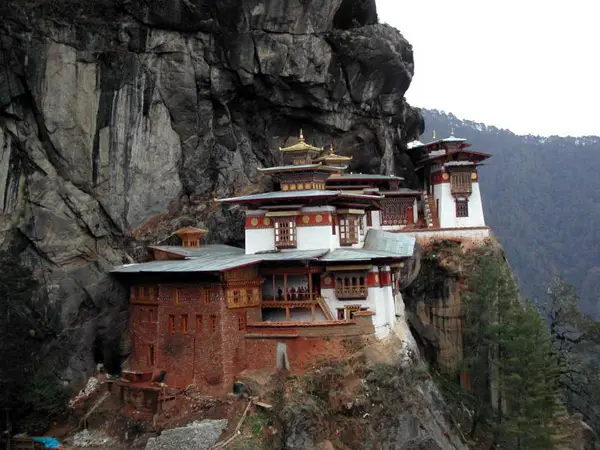
Clinging dramatically to a sheer cliff face high above the Paro Valley, Tiger’s Nest is one of Bhutan’s most iconic landmarks. The monastery complex appears almost suspended above the forested mountainside, creating one of the most unforgettable sights in the Himalayas.
The hike to the monastery takes less than three hours uphill, depending on your pace and trail conditions. The well-established trail winds through pine forest, with occasional prayer flags and viewpoints offering increasingly impressive views of the monastery and Paro Valley.
With advance arrangement, ponies may be available to carry hikers for approximately the first two-thirds of the ascent. The ponies cannot continue beyond this point, and the final section to the monastery must be completed on foot.
According to Bhutanese Buddhist tradition, Guru Padmasambhava (Guru Rinpoche) flew from Tibet to this cliff on the back of a tigress. He is believed to have meditated in a cave here before subduing local forces and establishing Buddhism in Bhutan. The sacred cave remains within the monastery complex, making Taktsang an important pilgrimage site as well as a cultural landmark.
Spend time exploring the monastery, its temples, courtyards, and sacred spaces before beginning the descent.
Afternoon : Kyichu Lhakhang and Bhutanese Farmhouse Experience
After returning to Paro, enjoy lunch and take some time to rest before continuing your cultural exploration.
Visit Kyichu Lhakhang, one of Bhutan’s oldest and most revered temples. The temple is traditionally associated with King Songtsen Gampo of Tibet, who is believed to have built a network of 108 temples across the Himalayan region in the 7th century to subdue a giant demoness who was obstructing the spread of Buddhism. Kyichu Lhakhang is regarded as one of these important temples.
Continue with a visit to a traditional Bhutanese farmhouse, where you can meet a local family and experience a more personal side of rural Bhutanese life. The colorful farmhouse showcases traditional Bhutanese craftsmanship, with timber construction, elaborate decorative details, and distinctive architectural features.
With advance arrangement, you can share a traditional Bhutanese meal with the family, providing an opportunity to experience local food and hospitality in an authentic home setting.
Evening : Optional Traditional Hot Stone Bath
After a rewarding day of hiking and cultural exploration, you may choose to experience a traditional Bhutanese hot stone bath, a long-standing Bhutanese wellness tradition.
The bath uses heated river stones to warm the water, creating a relaxing experience after a day on the trail. Advance notice is required to arrange the experience, and the approximate cost is US$30 per person, subject to local availability and current pricing.
Return to Khangkhu Resort for dinner and overnight.
Far & High Tip: Start the Tiger’s Nest hike early to enjoy cooler temperatures and a more peaceful trail. Wear sturdy walking shoes, carry water, and bring layers because temperatures can change noticeably as you gain elevation. If you are considering using a pony for part of the ascent, please let us know in advance so arrangements can be made.
Day 6 Summary
Altitude: Paro – approximately 2,250 m (7,380 ft); Tiger’s Nest – approximately 3,120 m (10,235 ft)
Distance traveled: Approximately 25–35 km / 15–22 miles by vehicle, plus approximately 8 km / 5 miles hiking round trip
Driving time: Approximately 1–1.5 hours, excluding sightseeing and stops
Hiking: Tiger’s Nest – approximately 4–6 hours round trip, including time at the monastery
Key attractions & activities: Taktsang (Tiger’s Nest) Monastery, Himalayan mountain scenery, Guru Rinpoche traditions, Kyichu Lhakhang, traditional Bhutanese farmhouse and family visit, optional traditional hot stone bath
Meals: Breakfast, lunch, and dinner
Overnight: Khangkhu Resort or similar, Paro
Day 7 – Depart Paro – Farewell to Bhutan
Morning : Departure from Paro
Your 7 - Day Bhutan tour concludes today. Enjoy your final breakfast at the hotel before checking out and transferring to Paro International Airport for your onward flight.
Depending on your flight schedule, there may be some free time to enjoy the peaceful surroundings of the Paro Valley or do some last-minute shopping for Bhutanese handicrafts and souvenirs.
Your guide and driver will accompany you to the airport and assist you with your departure formalities. As you bid farewell to Bhutan, take with you memories of its spectacular Himalayan landscapes, ancient monasteries and dzongs, vibrant culture, and warm hospitality.
Tashi Delek, and we hope to welcome you back to Bhutan someday!
Day 7 Summary
Altitude: Paro – approximately 2,250 m / 7,380 ft
Distance traveled: Approximately 10–15 km / 6–9 miles, depending on your hotel location
Driving time: Approximately 20–30 minutes to Paro International Airport
Key attractions & activities: Hotel checkout, leisure time in Paro, airport transfer, and departure from Bhutan
Meals: Breakfast
Overnight: None – tour concludes at Paro International Airport
Tour Map
Dates and prices
Pick a start date and your group size to see the price per person. Every departure is private unless it is listed as a group trip.
Price and group size
Trip Pricing Based On the Group Size
Solo Traveler Private Trip: US$ 2,740
2 Persons: US$ 2,590 per person
3 persons: US$ 2,440 per person
4 persons & above: US$ 2,230 per person.
Private Room Supplement: US$ 270
Special Offer
Are you a group of 4 family members or friends- ask us about the exclusive group pricing, we love rewarding travelers who explore together.
Included Government Fees and Internal Airfares
Sustainable Tourism Development Fee (SDF): US$ 100 per person per day.
Tourism Tax: 5%
Important: Limited-Time Government Discount
The current rate of SDF $100 per person per day which is already included in the trip cost reflects a 50% promotional discount offered as part of Bhutan’s post‑COVID tourism recovery initiative. This discount expires on August 31, 2027.
Should the government revise fees or airfare before your travel date, any difference will be reflected on your final invoice, ensuring full transparency.
What’s included
Included
Accommodation on double occupancy basis.
Three meals a day
All transfers by a private vehicle.
English-speaking local guide(s)
Bhutan visa fee ($40)
Tourism sustainable development fee ($100/day)
Sightseeing admission fees.
Service of airfare reservation on request. Aifare is not included.
Not included
Private room supplement ($210), required if you are not sharing a room with another traveler.
Extra expenses or loss due to nature and unforeseen events beyond human control
Travel Insurance.
International airfares and airport taxes.
Personal expenses such as drinks, tipping, laundry, phone, internet, etc.
Ask a question
Postak reads and answers every question himself, usually within a day.