Tibet
8 days
·
Groups up to 16
Trip at a Glance
Starts
Lhasa, Tibet (3,650 m / 11,975 ft))
Ends
Lhasa, Tibet (3,650 m / 11,975 ft))
Highest altitude
5,248 m (17,217 ft) (Gyatso La Pass)
Difficulty
Moderate Plus
Accommodation
Mid‑range hotels where good options are available; best available in remote areas.
Meals
Daily breakfast at your hotels
Activities
Cultural sightseeing, walking, and overland travels.
Transport
Private van or coash
Best season
April to May, September to October
Guides
Local certified guides
Trip Introduction
An 8-day loop from Lhasa to the North Face of Everest and back, starting with three nights in Lhasa for the Potala Palace, Jokhang Temple and the debate courtyard at Sera Monastery. You'll cross Gambala Pass above Yamdrok Tso, see the Gyantse Kumbum, watch sunset over Everest from Rongbuk, and return by a different road via Sakya Monastery and Tashilhunpo.
Trip Highlights
The 8-Day Lhasa to Everest Base Camp Tour combines Tibet’s greatest cultural landmarks with an extraordinary high-altitude journey across the Tibetan Plateau to the North Face of Mt. Everest. Beginning with three nights in Lhasa for sightseeing and gradual acclimatization, the journey continues through turquoise lakes, glaciers, historic monasteries, remote Tibetan settlements, and dramatic Himalayan passes before reaching Everest Base Camp. A different return route via Dinggye and Sakya adds another dimension to this memorable Lhasa Everest Base Camp Round Trip.
Sacred Heritage & Acclimatization in Lhasa
Spend three nights in Lhasa at 3,650 meters (11,975 feet), allowing valuable time to adjust to the altitude while discovering the spiritual and cultural heart of Tibet.
Potala Palace: Explore Tibet’s most recognizable landmark, with its historic ceremonial halls, Buddhist chapels, religious artwork, and elaborate golden stupas associated with past Dalai Lamas.
Jokhang Temple & Barkhor Street: Experience the spiritual heart of old Lhasa as pilgrims make their traditional clockwise kora around Jokhang Temple through the historic Barkhor quarter.
Sera Monastery: Witness the animated philosophical debates that form part of the traditional monastic education system of Tibetan Buddhism.
Drepung & Nechung Monasteries: Explore one of Tibet’s great Gelug monastic centers and nearby Nechung Monastery, historically associated with the State Oracle of Tibet.
Sacred Lakes, Glaciers & Historic Central Tibet
Leaving Lhasa, your Lhasa to EBC Tour crosses a remarkable succession of high passes, turquoise lakes, glaciers, agricultural valleys, and historic Tibetan towns.
Yamdrok Tso: Look across the brilliant turquoise waters of one of Tibet’s most revered sacred lakes from the high mountain viewpoints above its winding shoreline.
Karola Glacier: See a dramatic wall of glacial ice descending from the surrounding high mountains close to the road.
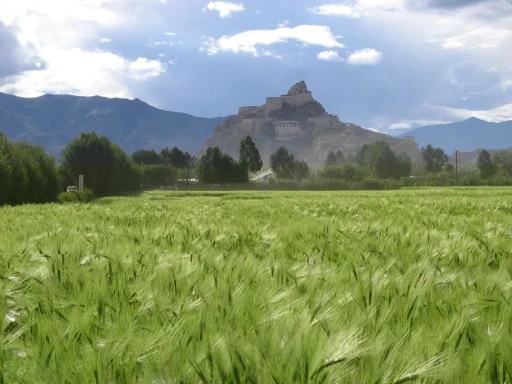
Gyantse Kumbum & Pelkor Chode Monastery: Explore one of Tibet’s most distinctive religious complexes, renowned for its multi-level Kumbum filled with Buddhist chapels, murals, sculptures, and sacred imagery.
Shigatse: Spend time in Tibet’s second-largest city, an important cultural and historical center along the route between Lhasa and Everest.
Tashilhunpo Monastery: Visit the historic seat of the Panchen Lamas and its impressive Maitreya Chapel, home to an immense gilded statue of the Future Buddha.
High Himalayan Passes & Mt. Everest
The defining stage of your Everest Base Camp Tibet Tour takes you deep into the high Himalayas, where immense mountain landscapes replace the broader valleys of Central Tibet.
Gyatso La Pass (5,248 m / 17,217 ft): Cross one of the highest points of the journey as the route climbs into the increasingly remote landscapes of western Tibet.
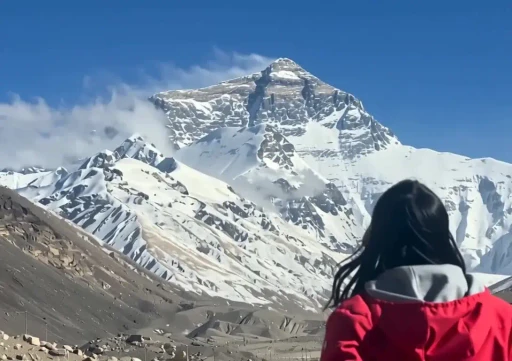
Gawula Pass (5,198 m / 17,054 ft): On clear days, enjoy an extraordinary Himalayan panorama encompassing several of the world’s highest mountains, including Makalu, Lhotse, Mt. Everest, and Cho Oyu.
Rongbuk Monastery: Visit this remote Buddhist monastery in an extraordinary setting beneath the immense North Face of Mt. Everest.
Everest Base Camp: Reach the great geographical highlight of the journey at approximately 5,200 meters (17,060 feet), with unforgettable views toward the North Face and summit of Mt. Everest (8,848.86 m / 29,031.7 ft).
Everest Sunset & Sunrise: Weather permitting, watch changing evening and morning light illuminate the upper slopes of the world’s highest mountain.
A Different Route Back to Lhasa
One of the distinctive features of this Lhasa Everest Base Camp Round Trip is that the return journey reveals additional landscapes and cultural sites rather than simply retracing the entire outbound route.
Dinggye Region: Travel through remote high-altitude valleys, wetlands, pastoral landscapes, and traditional settlements, with additional Himalayan views when conditions are clear.
Sakya Monastery: Explore the principal seat of the Sakya tradition of Tibetan Buddhism, distinguished by its fortress-like architecture, characteristic grey, red, and white walls, and remarkable collection of Buddhist scriptures.
Yarlung Tsangpo River Valley: Complete your Tibet Everest Base Camp Tour with a scenic journey through the broad river valley from Shigatse back to Lhasa, bringing the eight-day circuit across Tibet to a fitting conclusion.
Day-by-Day Itinerary
Day 1: Welcome to Lhasa – Arrival & Acclimatization
Afternoon: High-Mountain Welcome to Lhasa
Tashi Delek! Welcome to Lhasa, the spiritual heart of Tibet and the starting point of your Lhasa to Everest Base Camp Tour. Upon arrival at Lhasa Gonggar Airport or Lhasa Railway Station, meet your local Tibetan guide and driver and receive a traditional white khata, a ceremonial scarf offered as a gesture of welcome and goodwill.
From Lhasa Gonggar Airport, enjoy a scenic drive through the broad Yarlung Tsangpo River Valley before turning toward Lhasa. The journey offers your first impressions of the Tibetan Plateau, with rugged mountains, river valleys, traditional settlements, and high-altitude landscapes unfolding along the way. Travelers arriving by train will have a shorter transfer from Lhasa Railway Station to the hotel.
After check-in, leave the remainder of the afternoon free for rest and acclimatization. At approximately 3,650 meters (11,975 feet) above sea level, Lhasa is considerably higher than most travelers are accustomed to, so this first day is intentionally kept easy. Avoid strenuous activity, drink water regularly, eat lightly, and give your body time to adjust to the thinner mountain air.
This gradual start is particularly important because your journey will climb substantially higher as you travel across Tibet toward Everest Base Camp.
Evening: Rest & Gentle Exploration
Keep your first evening in Lhasa relaxed. If you are feeling comfortable after the journey, take a short, leisurely walk near your hotel to get your first glimpse of everyday life in the Tibetan capital. Otherwise, simply rest and prepare for the cultural exploration of Lhasa beginning the following morning.
Avoid strenuous exercise and excessive alcohol, stay well hydrated, and get a good night's sleep. There is no need to rush, your first day is designed specifically to help you adjust before the Lhasa to EBC Tour continues into progressively higher terrain.
Day 1 Summary
Maximum Altitude: 3,650 m (11,975 ft)
Overnight Altitude: 3,650 m (11,975 ft)
Distance: Approx. 65 km (40 miles) from Lhasa Gonggar Airport / 20 km (12 miles) from Lhasa Railway Station
Driving Duration: Approx. 1 hour from the airport / 30–40 minutes from the railway station
Key Activities: Arrival in Lhasa, traditional khata welcome, scenic transfer, hotel check-in, rest and altitude acclimatization
Meals Included: None
Overnight: Tibet Gorkha Hotel or similar (3-Star)
Acclimatization Tip: Take your first day in Lhasa slowly. Drink water regularly, eat light meals, avoid strenuous activity and excessive alcohol, and allow plenty of time to rest. A mild headache, tiredness, or shortness of breath with exertion can occur after arriving at high altitude; inform your guide if you feel unwell or if symptoms become more pronounced.
Day 2: Cultural Immersion – Tibet Museum, Sacred Temples & Sera Debates
Morning: Sacred Heritage of Lhasa
After breakfast, begin your cultural exploration in the spiritual heart of Lhasa with a visit to Jokhang Temple, the most sacred temple in Tibetan Buddhism. At its heart is the revered Jowo Shakyamuni, a sacred image of the Buddha that draws pilgrims from across Tibet.
Observe devotees prostrating before the temple entrance, turning prayer wheels, lighting butter lamps, and making offerings as they continue centuries-old traditions of faith and pilgrimage.
Step outside onto Barkhor Street, the historic pilgrimage circuit surrounding Jokhang Temple. Join local devotees walking clockwise along the traditional kora, passing incense burners, prayer wheels, old Tibetan buildings, small shops, and stalls selling religious objects and traditional handicrafts.
Continue to the Tibet Museum, where exhibits of historical artifacts, religious art, traditional costumes, manuscripts, and cultural objects provide valuable context for the landscapes, monasteries, and communities you will encounter during the journey across Tibet.
Afternoon: Monastic Life & Debates at Sera Monastery
After lunch, drive to Sera Monastery, one of Lhasa's historic "Great Three" Gelug monasteries.
Explore the monastery complex with your guide before visiting the debate courtyard, where monks traditionally gather for their lively philosophical debates. These distinctive exchanges combine Buddhist reasoning with dramatic gestures, challengers clap their hands, step forward, and pose questions while seated monks respond and defend their interpretations of Buddhist philosophy.
More than a performance for visitors, the debates are part of a longstanding system of monastic education and provide a fascinating glimpse into the intellectual traditions of Tibetan Buddhism.
The visit also adds important cultural perspective to your Tibet Everest Base Camp Tour, balancing the dramatic landscapes ahead with a deeper understanding of Tibet's living Buddhist heritage.
Evening: Leisure & Continued Acclimatization
Return to central Lhasa and enjoy the remainder of the evening at a relaxed pace. You may dine at a local restaurant and sample Tibetan specialties such as momo dumplings or thukpa noodle soup.
If you are feeling comfortable at the altitude, take a gentle evening stroll around the old quarter or simply return to your hotel to rest. Keeping the day relatively easy provides another valuable night of acclimatization at 3,650 meters before your journey gradually reaches higher elevations.
Day 2 Summary
Maximum Altitude: 3,650 m (11,975 ft)
Overnight Altitude: 3,650 m (11,975 ft)
Distance: Approx. 25 km (15 miles) of local driving
Driving Duration: Approx. 1–1.5 hours total
Sightseeing Duration: Approx. 6–7 hours
Key Activities: Jokhang Temple, Barkhor Street kora, Tibet Museum, Sera Monastery and traditional monastic debates
Meals Included: Breakfast
Overnight: Tibet Gorkha Hotel or similar (3-Star)
Travel Tip: Dress respectfully when visiting temples and monasteries, walk clockwise around religious sites and kora routes, and follow your guide's instructions regarding photography. Rules can vary between individual halls, sacred images, and monastic areas, so always check before taking photographs or video.
Day 3: Architectural Marvels – Drepung Monastery, Nechung Oracle & Potala Palace
Morning: Drepung Monastery & Nechung Oracle
After breakfast, begin your final full day of sightseeing in Lhasa with a visit to Drepung Monastery, dramatically situated at the foot of Mount Gambo Utse. Founded in 1416, Drepung became one of the great centers of the Gelug tradition of Tibetan Buddhism and historically housed thousands of monks.
Walk through its maze of whitewashed monastic buildings, courtyards, chapels, and assembly halls as your guide introduces the monastery's religious traditions and its important place in Tibetan history.
Nearby, continue to Nechung Monastery, historically associated with the Nechung Oracle, the State Oracle of Tibet. Smaller and more intimate than Drepung, the monastery is particularly notable for its distinctive religious artwork, murals, and fascinating connection with Tibet's tradition of state oracles.
If you are well acclimatized and would like additional activity, you may take an optional kora walk along the pilgrimage paths around Drepung. The elevated trails offer expansive views across the Lhasa Valley. Because you are already at high altitude, keep the walk relaxed and follow your guide's advice before undertaking the longer circuit.
Return to central Lhasa for lunch.
Afternoon: Potala Palace – Icon of Tibet
In the afternoon, visit the magnificent Potala Palace, Lhasa's most recognizable landmark and one of the great architectural treasures of Tibet.
Climb gradually toward the palace entrance, pausing whenever necessary to adjust to the altitude. Inside, explore a remarkable succession of ceremonial halls, Buddhist chapels, historic living quarters, religious artwork, and elaborate golden stupas associated with past Dalai Lamas.
As your guide explains the palace's religious and political history, you will gain a deeper understanding of the cultural heritage that has shaped Tibet for centuries. Visiting the Potala Palace is a fitting conclusion to your time in Lhasa before your Lhasa to Everest Base Camp Tour heads west across the Tibetan Plateau the following morning.
Potala Palace Tip: Reaching the main palace involves a substantial uphill approach and numerous steps at approximately 3,650 meters (11,975 feet). Walk slowly, avoid rushing, and pause when necessary. Security and entry regulations are strict, so follow your guide's instructions about prohibited items and keep your required identification readily accessible.
Evening: Optional Tibetan Cultural Dinner & Folk Performance
For your final evening in Lhasa, consider an optional Tibetan dinner accompanied by traditional music and dance.
Depending on the venue and performance schedule, the evening may feature regional costumes, folk songs, dances, and other presentations inspired by Tibet's diverse cultural traditions. Sample local dishes while enjoying a relaxed cultural evening before leaving Lhasa the following morning.
This optional experience is not included in the tour price. If you are interested, ask your guide to recommend a suitable venue and assist with reservations.
Day 3 Summary
Maximum Altitude: Approx. 3,800 m (12,467 ft), depending on the Drepung kora walk
Overnight Altitude: 3,650 m (11,975 ft)
Distance: Approx. 30 km (18 miles) of local driving
Driving Duration: Approx. 1–1.5 hours total
Sightseeing Duration: Approx. 7–8 hours
Key Activities: Drepung Monastery, Nechung Monastery, optional Drepung kora walk and Potala Palace
Meals Included: Breakfast
Overnight: Tibet Gorkha Hotel or similar (3-Star)
Important Note – Potala Palace Entry: Potala Palace visits operate with controlled admission and assigned entry times. Depending on the confirmed time slot for your group, your guide may reverse or adjust today's sightseeing sequence. Any necessary changes will be made while preserving the planned visits as closely as possible.
Day 4: Scenic Plateau Drive – Yamdrok Lake, Gyantse Kumbum & Shigatse
Morning: Yamdrok Lake & High Mountain Passes
After breakfast, leave Lhasa and begin the spectacular westward journey across the Tibetan Plateau. Today marks the true road-trip stage of your Lhasa to Everest Base Camp Tour, as the route climbs from the Lhasa Valley toward sacred lakes, high mountain passes, glaciers, and the historic towns of Central Tibet.
Ascend a series of mountain switchbacks to Gambala Pass (4,790 m / 15,715 ft), where prayer flags flutter above sweeping views of Yamdrok Tso, one of Tibet's most revered sacred lakes. Far below, its brilliant turquoise waters wind between barren mountain ridges, creating one of the most memorable landscapes along the route.
Descend toward the lakeshore and follow the changing contours of Yamdrok Tso, stopping at scenic viewpoints along the way. Continue across the high plateau toward Karola Glacier, where an immense wall of ice and snow descends from the surrounding mountains close to the highway.
The combination of high passes, turquoise water, snow-covered peaks, and glacial scenery provides a dramatic introduction to the increasingly rugged landscapes that lie ahead.
Afternoon: Pelkor Chode Monastery & Gyantse Kumbum
Continue to Gyantse, an important historic town along the traditional trade routes connecting Tibet with neighboring Himalayan regions. After lunch, visit the Pelkor Chode Monastery, a distinctive religious complex historically associated with several traditions of Tibetan Buddhism.
Within the monastery complex stands the remarkable Gyantse Kumbum, one of Tibet's most celebrated architectural and artistic monuments. Rising through multiple levels, this extraordinary structure contains numerous chapels decorated with Buddhist sculptures, murals, and religious imagery.
Walk through the monastery grounds with your guide and learn about Gyantse's religious and historical importance before continuing toward Shigatse.
Late Afternoon/Evening: Continue to Shigatse
Depart Gyantse and follow the broad agricultural valleys of Central Tibet toward Shigatse, Tibet's second-largest city and an important staging point on the journey toward Everest.
Upon arrival, check into your hotel and settle in for the evening. The increase in overnight altitude from Lhasa is relatively modest, allowing another night of gradual acclimatization before tomorrow's journey reaches considerably higher elevations.
Use the evening to rest, organize your daypack, charge cameras and devices, and speak with your guide about the next stage of your Lhasa Everest Base Camp Round Trip. Tomorrow, the route climbs across some of the highest terrain of the journey as you travel toward the Mount Everest region.
Day 4 Summary
Maximum Altitude: 5,010 m (16,437 ft) at Karola Pass area
Overnight Altitude: 3,840 m (12,598 ft) in Shigatse
Distance: Approx. 350 km (217 miles)
Driving Duration: Approx. 7–8 hours, including sightseeing stops
Key Activities: Gambala Pass, Yamdrok Tso, Karola Glacier, Pelkor Chode Monastery, Gyantse Kumbum and scenic drive to Shigatse
Meals Included: Breakfast
Overnight: Gesar Hotel or similar (4-Star / best available equivalent)
Travel Tip: At some popular viewpoints around Yamdrok Tso and the high passes, local residents may offer photographs with decorated yaks, Tibetan mastiffs, or other animals for a fee. If you choose to participate, confirm the price clearly with the owner before taking photographs to avoid misunderstandings.
Day 5: Gateway to the Summit – Shigatse to Everest Base Camp
Morning: Across the High Tibetan Plateau
Depart Shigatse early this morning and travel west across the vast Tibetan Plateau toward the Mount Everest region. This is one of the most dramatic days of your Lhasa to Everest Base Camp Tour, as the route climbs through increasingly remote landscapes and crosses some of the highest terrain of the journey.
Continue toward Gyatso La Pass (5,248 m / 17,217 ft), where colorful prayer flags mark the high point and expansive views stretch across the surrounding plateau. Descend through remote valleys and settlements before turning toward the Mount Everest Nature Reserve.
The road then climbs toward Gawula Pass (5,198 m / 17,054 ft), one of the great Himalayan viewpoints in Tibet. On a clear day, the panorama reveals a remarkable sweep of the Himalayan range, including several of the world's highest mountains, Makalu, Lhotse, Mt. Everest and Cho Oyu.
From the pass, descend along a spectacular series of mountain switchbacks toward the valleys below, with Mt. Everest gradually drawing closer as you continue toward the northern base of the world's highest mountain.
Afternoon: Rongbuk Monastery & Everest Base Camp
Continue toward the Everest region and transfer to the designated local shuttle service where required for the final approach toward Rongbuk Monastery and Everest Base Camp.
Situated at approximately 5,000 meters (16,404 feet), Rongbuk Monastery occupies an extraordinary setting directly below the immense North Face of Mt. Everest. Explore the monastery with your guide and take time to appreciate one of the most iconic mountain landscapes anywhere in Tibet.
Continue to the designated Everest Base Camp visitor area, where, weather permitting, you can enjoy unobstructed views toward the North Face and summit of Mt. Everest (8,848.86 m / 29,031.7 ft).
After several days of gradual acclimatization in Lhasa and Shigatse, reaching the foot of Mt. Everest is the defining moment of your Everest Base Camp Tibet Tour.
Evening: Sunset over Mt. Everest
As evening approaches, watch the changing light across the North Face of Mt. Everest. When skies remain clear, the setting sun can illuminate the upper slopes and summit in shades of gold and orange, creating one of the most memorable scenes of the entire journey.
Your overnight arrangements will depend on the operating season, current local regulations, accommodation availability, and your confirmed itinerary. Depending on these conditions, accommodation may be available in the Rongbuk/Everest area or at a lower-altitude settlement outside the immediate base camp area.
Facilities in the Everest region are considerably more basic than those in Lhasa or Shigatse. Rooms may be simple, heating can be limited, and nighttime temperatures can fall sharply. The reward is an extraordinary evening beneath the world's highest mountain.
Rest well tonight as tomorrow your Lhasa Everest Base Camp Round Trip begins its return journey across the Tibetan Plateau.
Day 5 Summary
Maximum Altitude: 5,248 m (17,217 ft) at Gyatso La Pass
Everest Base Camp Area: Approx. 5,200 m (17,060 ft)
Overnight Altitude: Varies according to confirmed accommodation in the Everest region
Distance: Approx. 340 km (211 miles)
Driving Duration: Approx. 7–9 hours, depending on road conditions, sightseeing stops and local shuttle arrangements
Key Activities: Gyatso La Pass, Gawula Pass, Himalayan panorama, Mt. Everest Nature Reserve, Rongbuk Monastery, Everest Base Camp visitor area and sunset views of Mt. Everest
Meals Included: Breakfast
Overnight: Everest region accommodation as confirmed for your departure
Travel Tip: Temperatures around Everest Base Camp can drop rapidly after sunset, even during the main travel season. Keep thermal base layers, a warm insulated jacket, hat, gloves and other cold-weather essentials readily accessible in your daypack. At this elevation, move slowly, stay hydrated and immediately tell your guide if you develop significant or worsening altitude-related symptoms.
Day 6: Sacred Valleys & Fortress Temples – Everest Base Camp to Sakya & Shigatse
Morning: Sunrise over Everest & Journey via Dinggye
Rise early for one final opportunity to watch the first morning light illuminate Mt. Everest. When skies are clear, sunrise can transform the upper slopes and summit into shades of gold and pink, a memorable farewell to the world's highest mountain.
After breakfast, begin the return stage of your Lhasa Everest Base Camp Round Trip, leaving the Everest region and traveling east through the vast landscapes of the Tibetan Plateau.
Rather than simply retracing the same route, today's journey takes you through the Dinggye (Dingye) region, revealing a different side of the Himalayas. Along the way, stop at scenic viewpoints where high-altitude wetlands, broad valleys, grazing lands, and distant snow-covered peaks create a striking contrast.
On clear days, the route offers impressive perspectives toward the Himalayan range, including Mt. Everest and Lhotse, before continuing through remote settlements and pastoral landscapes toward Sakya.
Afternoon: Sakya Monastery – Seat of the Sakya Tradition
Continue to Sakya, situated at approximately 4,300 meters (14,108 feet), to visit the historic Sakya Monastery, the principal seat of the Sakya tradition of Tibetan Buddhism.
The monastery immediately stands apart from many other Tibetan religious complexes. Its massive fortress-like walls and characteristic grey, red, and white coloring reflect the distinctive identity of the Sakya tradition.
Explore the monastery complex with your guide, including its impressive assembly spaces and extraordinary collection of Buddhist scriptures and religious texts. Sakya has been an important center of Tibetan Buddhist scholarship for centuries, and its extensive collections preserve an invaluable legacy of Tibetan religious literature, philosophy, history, and art.
The monastery's imposing architecture, ancient religious treasures, and scholarly heritage make Sakya one of the cultural highlights of your return journey from Everest.
Late Afternoon/Evening: Return to Shigatse
After visiting Sakya Monastery, continue across the plateau toward Shigatse. The journey gradually descends from the higher terrain, eventually returning to the broader valleys surrounding Tibet's second-largest city.
Upon arrival, check into your hotel and enjoy a well-earned evening of rest. After the very high elevations of the Everest region, sleeping again at approximately 3,840 meters (12,598 feet) generally provides a more comfortable environment for the night.
Tomorrow, your Lhasa to EBC Tour completes its return across Central Tibet toward Lhasa.
Day 6 Summary
Maximum Altitude: Above 5,000 m (16,404 ft) if departing from the immediate Everest Base Camp/Rongbuk area
Overnight Altitude: 3,840 m (12,598 ft) in Shigatse
Distance: Approx. 388 km (241 miles)
Driving Duration: Approx. 7.5–9 hours, depending on road conditions and sightseeing stops
Key Activities: Sunrise views of Mt. Everest, scenic drive through the Dinggye region, Himalayan and high-altitude wetland landscapes, Sakya Monastery and return to Shigatse
Meals Included: Breakfast
Overnight: Gesar Hotel or similar (4-Star / best available equivalent)
Travel Tip: Sakya Monastery preserves an extraordinary collection of historic Buddhist scriptures and religious texts. Interior lighting can be subdued, and photography or the use of lights may be restricted in certain areas. Follow your guide and monastery staff regarding photography and avoid using a phone flashlight around sensitive manuscripts, murals, or sacred objects unless specifically permitted.
Day 7: Spiritual Treasures & River Drive – Tashilhunpo to Lhasa
Morning: Tashilhunpo Monastery & the Panchen Lama Legacy
After breakfast, visit Tashilhunpo Monastery, the historic seat of the Panchen Lamas and one of the most important Gelug monasteries in Tibet. Founded in the 15th century, the sprawling complex rises against the hills of Shigatse, its golden rooftops, whitewashed walls, prayer halls, and monastic courtyards creating one of the city's most impressive landmarks.
Walk through the monastery with your guide as monks move between assembly halls, chapels, and living quarters. Visit the remarkable Maitreya Chapel, home to an immense gilded statue of Maitreya, the Future Buddha, rising approximately 26 meters (85 feet).
Continue through the monastery to see richly decorated chapels and memorial stupas associated with past Panchen Lamas while learning about the important religious role Tashilhunpo has played in Tibetan Buddhism for centuries.
Afternoon: Scenic Drive along the Yarlung Tsangpo River
After visiting Tashilhunpo Monastery, leave Shigatse and begin the final drive east toward Lhasa.
Follow the broad Yarlung Tsangpo River Valley, passing cultivated farmland, traditional settlements, rugged mountain slopes, and stretches of the river as it winds across the Tibetan Plateau. After several days of high passes and remote Himalayan terrain, today's drive provides a gentler transition back toward the capital.
By late afternoon, arrive in Lhasa and check into your hotel. Your return to the city completes the road circuit of the Lhasa Everest Base Camp Round Trip, from Lhasa across Central Tibet to the North Face of Mt. Everest and back again.
Evening: Barkhor Street & Final Evening in Lhasa
Enjoy your final evening in Lhasa at leisure. If you would like to return to the historic old quarter, stroll through Barkhor Street and join pilgrims making their clockwise kora around Jokhang Temple one last time.
You may also browse local shops and market stalls for Tibetan handicrafts, religious objects, textiles, incense, artwork, and other souvenirs. For higher-value items such as thangka paintings, jewelry, antiques, or objects represented as authentic cultural artifacts, ask your guide for assistance in identifying reputable shops and understanding what can legally be taken out of the country.
Afterward, enjoy a relaxed final dinner and reflect on the extraordinary landscapes, monasteries, high mountain passes, and Himalayan scenery experienced during your Lhasa to Everest Base Camp Tour.
Day 7 Summary
Maximum Altitude: Approx. 3,900 m (12,795 ft) along the Shigatse–Lhasa route
Overnight Altitude: 3,650 m (11,975 ft) in Lhasa
Distance: Approx. 270 km (168 miles)
Driving Duration: Approx. 4–5 hours
Sightseeing Duration: Approx. 2–3 hours at Tashilhunpo Monastery, plus optional evening exploration
Key Activities: Tashilhunpo Monastery, Maitreya Buddha Chapel, scenic Yarlung Tsangpo River Valley drive, return to Lhasa and optional Barkhor Street exploration
Meals Included: Breakfast
Overnight: Tibet Gorkha Hotel or similar (3-Star)
Travel Tip: Bargaining may be appropriate at some market stalls around Barkhor, while established shops may use fixed prices. If you are considering expensive jewelry, thangka paintings, antiques, or other high-value cultural items, ask your guide to recommend reputable sellers and clarify any restrictions that may apply when taking cultural or religious objects out of Tibet.
Day 8: Tashi Delek & Farewell – Departure from Lhasa
Morning: Final Moments in Lhasa
Enjoy your final breakfast in Lhasa and take a few quiet moments to reflect on the remarkable journey across the Tibetan Plateau. Over the past eight days, you have explored Lhasa's great monasteries and cultural landmarks, crossed high mountain passes, followed the shores of sacred Yamdrok Tso, traveled through Gyantse and Shigatse, and stood beneath the towering North Face of Mt. Everest.
Depending on your departure schedule, you may have time for a leisurely final walk near your hotel or one last glimpse of the Potala Palace rising above the Lhasa skyline.
Departure: Transfer to Lhasa Airport or Railway Station
At the designated time, meet your Tibetan guide and driver at the hotel for your private transfer to Lhasa Gonggar Airport or Lhasa Railway Station.
As you say farewell to your local Tibetan team, your Lhasa to Everest Base Camp Tour comes to an end. Depart Lhasa with lasting memories of ancient monasteries, sacred landscapes, turquoise lakes, remote Himalayan valleys, high mountain passes, and unforgettable views of Mt. Everest.
Whether you continue to another destination in Mainland China or begin your journey home, the landscapes and cultural experiences of Tibet will remain among the enduring memories of your Himalayan adventure.
Day 8 Summary
Maximum Altitude: 3,650 m (11,975 ft) in Lhasa
Departure Altitude: Approx. 3,570 m (11,713 ft) at Lhasa Gonggar Airport / approx. 3,650 m (11,975 ft) at Lhasa Railway Station
Distance: Approx. 65 km (40 miles) to Lhasa Gonggar Airport / 20 km (12 miles) to Lhasa Railway Station
Driving Duration: Approx. 1 hour to the airport / 30–40 minutes to the railway station
Key Activities: Breakfast, hotel check-out, private airport or railway station transfer and onward departure
Meals Included: Breakfast
Overnight: Not applicable
Departure Tip: Your guide will advise the appropriate hotel departure time based on your confirmed flight or train schedule and current check-in requirements. Keep your passport and any travel or permit documents that your guide instructs you to retain readily accessible until your departure formalities are complete.
Dates and prices
Pick a start date and your group size to see the price per person. Every departure is private unless it is listed as a group trip.
Price and group size
Minimum Group Size: A minimum of 2 travelers is required for this tour to operate.
Seasonal & Group Tier Pricing: Tour costs vary based on the departure season and total group size. Please scroll down to the Price & Calendar section and hover over your desired travel date to view specific rates for different group sizes.
Large Group Discounts: Groups of 6 or more travelers qualify for a special group rate, please contact us directly to request a custom quote.
Private Single Room Supplement:$290(applicable for solo travelers requesting private room accommodations)
What’s included
Included
Tibet entry permit.
Accommodation on double occupancy basis.
Daily Breakfast at your hotel.
All transfers and sightseeing by a private air-conditioned van or minibus.
Sightseeing admission fees.
English speaking local certified Guide.
Not included
International and internal airfare.
Airport Taxes.
Chinese visa.
Lunch and dinner.
Drinks, tipping, laundry, phone, internet, and other personal expenses.
Travel insurance
All extra costs due to nature or unforeseen events.
Excess baggage charges.
Private single room supplement
FAQs
I am entering Tibet form mainland China. What travel documents do I need ?
Entering Tibet from mainland China.
Passport
You must hold a valid passport with at least six months of remaining validity beyond your return date, as well as a minimum of two blank visa pages. You can apply for an individual Chinese visa through the Chinese Embassy or your nearest Chinese Consulate. Please note that Chinese embassies and consulates do not accept visa applications by mail or online. You must apply in person, entrust someone to submit on your behalf, or hire a visa agency.
Submit your Chinese visa and a scan of your passport at least 45 days before your trip.
Please provide color scans of your passport photo page and Chinese visa no later than 45 days before your arrival in Lhasa. Our ground operator in Lhasa will then apply for your Tibet Entry Permit. An original copy of the permit will be couriered to your hotel in the gateway city three to four days prior to your flight. A digital copy will also be emailed to you; however, you must present the original permit along with your passport when boarding your flight to Lhasa.
Other documents
In addition, several other permits, such as the Alien’s Travel Permit and the Military Permit, will be arranged by our ground partner in advance. Your guide will carry all required documents for you throughout the journey.
I am entering Tibet from Kathmandu, Nepal.What travel documents do I need ?
Visa & Documentation: Entering Tibet from Nepal
Traveling into Tibet from Kathmandu requires specific permits and visas. Please review the passport and visa requirements carefully to ensure smooth entry.
Passport Requirements
Validity: Your original passport must be valid for at least 6 months beyond your planned travel dates.
Blank Pages: Must contain at least two full, consecutive blank visa pages for entry and exit stamps.
Chinese Visa Options (Individual vs. Group Visa)
Option A: Individual Chinese Visa (Strongly Recommended): Unlike past regulations, if you hold an individual Chinese Visa stamped directly in your passport prior to travel, you do not need a paper Group Visa to enter Tibet from Kathmandu.
Advantage: Allows you to enter Tibet seamlessly using your existing individual visa paired with the Tibet Travel Permit arranged by our team.
Requirements: Simply send us a high-resolution color scan of your passport photo page and valid Chinese Visa at least 45 days prior to your trip departure date.
Option B: Chinese Group Visa (From Kathmandu): If you do not hold an individual Chinese visa, a paper-based Chinese Group Visa can be arranged through the Chinese Embassy in Kathmandu upon arrival.
Important Note: Processing requires at least 5 working days before your Tibet entry date while your original passport is submitted to the embassy. Due to the processing timelines, obtaining an individual Chinese Visa in advance is always the preferred and most convenient option.
Tibet Permits & Required Submissions: To process your official travel authorization, we require the following documents no later than 45 days before your arrival date:
Color Scans Required: Clear, high-resolution color scans of your passport photo page and Chinese Visa.
Permit Processing: Our ground team in Lhasa uses these documents to secure your official Tibet Travel Permit (TTP).
Additional Required Permits (Handled Automatically)
Depending on your exact itinerary, including overland travel to Mount Everest Base Camp, additional regional authorizations are required:
Alien’s Travel Permit (for travel in restricted regions outside Lhasa, such as Shigatse and EBC)
Military & Border Permits (for border transit zones)
Stress-Free Logistics
You do not need to apply for these additional permits yourself. Our local team arranges all documentation in advance, and your certified Tibetan guide will carry and manage all original permit paperwork throughout your journey.
Can I travel to Tibet independently?
No. All foreign travelers must join an organized tour arranged through a licensed travel agency. A private vehicle, driver, and certified tour guide are required for the entire duration of your stay in Tibet.
What is a Tibet Travel Permit (TTP)? How I obtain it?
The Tibet Travel Permit (TTP), also known as the Tibet Entry Permit or TTB Permit, is the official government document issued by the Tibet Tourism Bureau that allows non-Chinese passport holders to enter and travel within the Tibet Autonomous Region (TAR).
Because independent travel for international tourists is restricted in Tibet, the TTP serves as your primary authorization to enter the region alongside your passport and Chinese Visa.
Passport + Chinese Visa + Tibet Travel Permit (TTP) ──► Board Flight/Train to Tibet
Key Facts About the Permit
What It Looks Like: A physical two-page document. Page 1 details your fixed itinerary and entry dates; Page 2 lists your personal details (full name, passport number, nationality).
Where It Is Checked: You must show the physical permit (or an official color copy, depending on your route) when boarding flights or trains to Lhasa, checking into hotels, and passing through security checkpoints along highways like the G318 to Everest Base Camp.
Fixed Itinerary: The permit strictly binds your travel to the exact route, dates, and cities approved by the bureau.
How and Where Can You Get It?
You cannot apply for or purchase a Tibet Travel Permit on your own. The Tibet Tourism Bureau does not accept individual applications directly from independent travelers, nor can you obtain one at a Chinese embassy, consulate, or border entry post.
Step 1: Book Tour Package with a local travel agency or their overseas partner such as Far & High Adventure travel
Step 2: Submit Passport & Chinese Visa Scans (45+ Days Prior)
Step 3: Agency Submits Application to Tibet Tourism Bureau
Step 4: Permit Issued ──► Delivered to your Hotel in China (or electronic copy emailed to you and the original held at Nepal Border )
The Only Official Channel: Licensed Travel Agencies
The only legal way to get a Tibet Travel Permit is through an authorized, licensed travel agency. The permit is automatically applied for as part of your pre-arranged tour package.
Required Documents to Provide
To submit the application on your behalf, your travel operator needs:
High-Resolution Passport Scan: Color copy of your passport photo page (valid for at least 6 months).
Chinese Visa Scan: Color copy of your valid Chinese Tourist Visa (L-Visa). (Note: If you qualify for China's 15-to-30-day visa-free entry, only your passport scan is required).
Application Timeline
Standard Application Window: Submit your documents at least 30 to 45 days before your planned arrival date in Tibet. Processing typically takes 10 to 15 working days at the bureau.
How the Permit Is Delivered to You
Once approved and printed in Lhasa, how you receive the document depends on your entry gateway:
Mainland China by Flight. The original physical permit is express-mailed directly to your hotel in mainland China (e.g., Chengdu, Beijing, Shanghai) before your flight to Lhasa.
Mainland China by Train: An official color printout copy (or original, depending on the station) is emailed to you to print before boarding the Qinghai-Tibet train.
Kathmandu, Nepal (Flight/Overland):
No Advance Physical Permit Required: You do not need to receive the physical permit in advance before departing Nepal.
Boarding & Check-in: You will be sent an official electronic copy of the permit via email prior to your flight or overland departure. Simply print a copy to present at the airline check-in counter or border post.
On-Arrival Handover: Your certified Tibetan tour guide will hold your original physical permit and meet you directly upon your arrival at Lhasa Airport or the Gyirong Port border crossing.
Do I need other permits for Mount Everest or Mount Kailash?
Yes. Visiting areas outside of Lhasa requires an Aliens' Travel Permit (arranged by your guide after you arrive in Tibet) and potentially a Military Permit for sensitive border zones like Mt. Kailash.
When is the best time to visit Tibet?
• Peak Season (April–October): Mild temperatures and clear skies make this the ideal period for viewing Mt. Everest. • Best Months: May and October often offer the most stable weather and excellent visibility. • Winter (November–January): Very cold but far less crowded, with lower costs and crisp, clear Himalayan views.
How do I get to Tibet?
Getting to Tibet is straightforward once your permits are secured. Because foreign travelers cannot enter Tibet independently, all entry requires a pre-booked tour through a licensed agency to obtain the mandatory Tibet Travel Permit (TTP).
You can enter Tibet via two main gateways: Mainland China or Kathmandu, Nepal, using either flight, high-altitude train, or overland travel.
Entering via Mainland China (Most Popular)
Entering from mainland China gives you the widest range of gateway cities, flight connections, and train routes into Lhasa.
By Air (Fastest): Direct flights to Lhasa Gonggar Airport (LXA) operate daily from major Chinese hub cities, including Chengdu, Chongqing, Xi'an, Beijing, Shanghai, and Kunming. Chengdu and Chongqing offer the most frequent daily departures (approx. 2–2.5 hours flight time).
By Qinghai-Tibet Railway (Most Scenic): The world’s highest railway connects mainland China to Lhasa. While trains depart from cities like Beijing, Shanghai, and Guangzhou, the most famous and scenic segment begins in Xining. The Xining-to-Lhasa train takes about 21 hours, crossing the high Changtang Plateau and Tanggula Pass (5,072m) in pressurized carriages with soft/hard sleeper berths.
Permit Requirement: You must show your original Tibet Travel Permit before boarding any flight or train bound for Lhasa from mainland China. Your permit will be delivered to your hotel in China prior to your departure.
Entering via Kathmandu, Nepal (Trans-Himalayan Gateway)
If your travel itinerary includes Nepal, you can travel directly from Kathmandu to Tibet across the Himalayas.
By Air: Kathmandu based Himalaya Airlines operate direct non-stop flights between Kathmandu (KTM) and Lhasa (LXA) multiple times per week. This short ~1.5-hour flight offers spectacular aerial views of the Himalayan range, including Mount Everest.
By Overland Drive: You can drive overland from Kathmandu to the Tibetan border at Gyirong Port (Zhangmu Port is closed currently), crossing into Tibet to begin your journey toward Shigatse, Everest Base Camp, and Lhasa.
Visa/Permit Requirement: Entering from Nepal requires either an Individual Chinese Visa (if obtained in advance) or a Chinese Group Visa processed via the Chinese Embassy in Kathmandu, paired with your official Tibet Travel Permit.
Note: Our team manages all official permit applications (Tibet Travel Permit, Alien's Travel Permit, and Border Passes) and assists with booking your internal flights or train tickets into Lhasa.
How can I prevent altitude sickness?
If you fly into Lhasa:
Spend 3–4 nights there before traveling to higher regions, such as Everest Base Camp that gives your body time to adjust to the altitude.
Avoid strenuous activities, running, or jumping.
Drink plenty of water (3–4 liters daily) and avoid alcohol and smoking, which can worsen symptoms.
Local experts advise against showering or washing hair for the first 24–48 hours. Showering increases blood circulation and oxygen consumption, while open pores from hot water can make you more vulnerable to catching a cold, which is dangerous at high altitudes.
If you are entering overland, the key guideline is to ascend gradually, ideally gaining no more than 300–500 meters (1,000–1,640 ft) of elevation per day once you are above 3,000 meters.
Is there medication for altitude sickness?
Some travelers use Diamox (acetazolamide), a prescription medication that doctors may recommend to help reduce the effects of altitude. It’s important to consult your healthcare provider before considering it, as they can advise whether it’s appropriate for you.
Many visitors also use local herbal remedies, such as Rhodiola (Hongjingtian). These are traditionally taken well in advance, often 10–14 days before arrival, to allow time for the body to adjust.
Always follow guidance from a medical professional and listen to your body as you ascend to higher altitudes.
What about the fitness level required for a non-trekking trip to Tibet?
For a general, non-trekking trip to Tibet (e.g., Lhasa, Shigatse, and driving to Everest Base Camp), you don't need to be an athlete, but you do need a baseline level of health.
The Reality of “Walking” in Tibet
Even on a non‑trekking tour, you will still do a fair amount of walking on uneven ground and climbing stairs. Many monasteries also have optional circumambulation paths that you may choose to walk.
Basic Fitness Expectations
Cardiovascular Endurance: Your heart and lungs work harder at altitude, even at rest. If you can comfortably walk 3–5 miles on flat ground at home, you’re generally fit enough for a standard Tibet tour.
Leg Strength: Expect many staircases. Travelers with knee or hip issues may find places like the Potala Palace or Barkhor Street more challenging.
Adaptability: The biggest factor isn’t physical strength, it’s how your body responds to lower oxygen levels. Very fit people can still experience altitude discomfort, while less active travelers may adjust easily.
Preparation Suggestions
Light Cardio: About two months before your trip, begin walking or swimming three times a week.
Stair Practice: Choose stairs over elevators to prepare for monastery climbs.
Prioritize Rest: Even good fitness won’t help if you push too hard. The travelers who feel best in Tibet are the ones who move slowly and take frequent breaks.
I have heart and lung issues, as well as high blood pressure. Should I travel to Tibet?
At high altitudes like Lhasa (3,650m) and beyond, the air is much thinner, which puts significant strain on your cardiovascular and respiratory systems as they work harder to deliver oxygen to your body. Conditions like severe coronary artery disease, heart failure (NYHA class >II), or recent heart surgery are typically considered contraindications for high-altitude travel.Chronic Obstructive Pulmonary Disease (COPD), severe asthma, or pulmonary hypertension can make breathing extremely difficult in the low-oxygen environment of the Tibetan plateau. If your BP is uncontrolled, you should not travel. However, if your hypertension is mild and well-managed with medication, you may be at no higher risk than other travelers, provided your doctor clears you.
We can’t assess your medical situation, but a doctor’s guidance is essential before planning a trip like this. A healthcare professional who knows your medical history can help you understand what’s safe for you.
Ask a question
Postak reads and answers every question himself, usually within a day.