Travel guide
Nepal Travel Guide
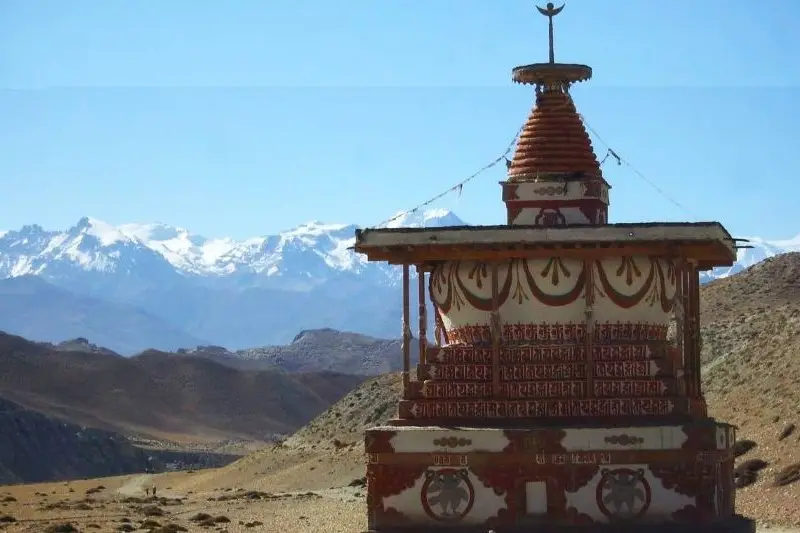
Whether you’re trekking beneath the Himalaya or exploring Kathmandu’s lively streets, understanding the practical side of travel is essential. This guide covers visas, getting in and out of Nepal, seasonal insights, currency and payments, cultural etiquette, communication options, and more to help you travel confidently

Mustang, Nepal. Photo Credit: Walter Somers
Entry Requirements
All international travelers, except Indian nationals, require a visa to enter Nepal. You can obtain a Nepal visa in advance from the nearest Nepali embassy or consulate, or simply get one on arrival at Kathmandu International Airport or designated land border crossings.
Getting Nepal Visa from Nepali Diplomatic Missions
If there is a Nepali embassy, consulate, or diplomatic mission near your hometown, it’s best to obtain your Nepal visa there in advance.
If you received your visa from a Nepalese diplomatic mission, you must enter Nepal within six months of the issue date. Your permitted length of stay begins counting from the day you actually arrive in Nepal.
Tourist Visa on Arrival at Kathmandu International Airport
If there are no Nepali diplomatic missions near your hometown, don’t worry. You can apply for a visa online and receive it upon arrival by following the steps below.
Initiate Online Application Beforehand
Fill in Online ‘Tourist Visa ‘ Application Form visiting Department of Immigration prior to your arrival at the airport in Kathmandu. When your online application is successfully submitted, you’ll receive a receipt with a barcode. Print this document and bring it with you to obtain your visa. The receipt is valid for only 15 days, so be sure to complete the online application within 15 days of your arrival at Kathmandu Airport. Be sure to have a digital passport photo and a scanned copy of your passport’s photo page ready to upload before starting the application.
Pay the Visa Fee in cash: Once you have the receipt, proceed to pay the visa fee at the bank counter.
Proceed to the immigration desk marked “Tourists Without Visa”, this is where your passport will be stamped with the visa sticker.
Documents Needed:
Clear color scan of your passport (valid for at least 6 months).
Clear scan of your passport picture.
Address of your hotel or residence for the first night in Nepal.
Using Kiosk Machines at Kathmandu International Airport
You can also complete the visa application at the airport using the kiosk machines, though lines may be long when several international flights arrive around the same time.
Once you have the submission receipt, pay the visa fee at the bank counter in cash and then proceed to the immigration desk marked “Tourists Without Visa” to get the visa sticker.
Visa Fee
15 Days: US$ 30
30 Days: US$ 50
90 Days: US$ 125
Exemptions
Indian Nationals: Do not require a visa but must carry a valid passport or voter ID card.
Citizens of SAARC countries: Eligible for a free 30-day ‘Gratis Visa’ once per calendar year.
Chidlren: Those under age 10 (except US citizens) typically have visa fees waived.
Trekking Permits
A standard tourist visa does not include permission for trekking. Most trekking routes require a TIMS Card (Trekkers’ Information Management System) as well as specific National Park or Conservation Area permits, such as those for Everest or Annapurna, which must be obtained separately. If you’re joining a fully organized tour, these permits are typically included in the package.
Best Time for Travel to Nepal
Nepal is a year‑round destination, but the most ideal times to visit are during the fall (September–November) and spring (March–May) seasons.
Seasonal Overview
Spring (Mar- May): The Blooming Season
What to Expect: Warming weather, longer daylight hours, and hillsides covered in red and pink rhododendrons (the national flower).
Best For: First-time trekkers, mountaineering expeditions (Everest summit season), and wildlife spotting in Chitwan National Park
Challenges: Afternoon haze and dust can obscure distant mountain views; pre-monsoon showers often start in May.
Perks: Stunning floral displays and slightly fewer crowds than autumn
Summer (June–August): Lush Landscapes During Monsoon
What to Expect: Intense afternoon/evening downpours, lush emerald landscapes, and roaring waterfalls.
Best For: “Rain shadow” trekking in Upper Mustang or Dolpo, budget travel, and cultural city tours.
Challenges: Leeches, slippery mud, frequent flight cancellations, and road blockages due to landslides.
Perks: Lowest prices, empty trails, and vibrant, verdant scenery for photographers.
Autumn (Late September – November)
What to Expect: Crisp, clear blue skies, mild daytime temperatures (°C to °C at lower altitudes), and dry trails.
Best For: High-altitude trekking (Everest Base Camp, Annapurna Circuit), photography, and major cultural festivals like Dashain and Tihar.
Challenges: Trails and teahouses are extremely crowded; flights to Lukla and popular accommodations must be booked months in advance. Hotel occupancies in the cities are high.
Perks: Guaranteed mountain views and a festive, social atmosphere.
Winter (December–February): The “Silent Season”
What to Expect: Clear, sunny days but freezing nights (as low as -20°C at high altitudes); heavy snow in the mountains.
Best For: Lower-elevation treks (Poon Hill, Mardi Himal), jungle safaris in the Terai, and peaceful cultural tours in Kathmandu or Pokhara.
Notable Festival: Tibetan New Year (Losar) (February/March) – The most important holiday, though the region often closes to foreigners during this time.
Challenges: High mountain passes (above 5,000m) are often blocked by snow; many high-altitude teahouses close for the season.
Perks: Maximum mountain visibility, zero crowds, and significant off-peak discounts on luxury hotels
How to Get to Nepal and Away
By Air
Getting to and from Most international travelers arrive via Tribhuvan International Airport (KTM) in Kathmandu, which handles 99% of international flights.
Major Transit Hubs
Because there are no direct flights from North America, most of Europe (except Turkey), or Australia, travelers typically connect through:
Middle East: Doha (Qatar Airways), Dubai (Emirates/Flydubai), or Istanbul (Turkish Airlines)
Asia: New Delhi (Air India/IndiGo), Bangkok (Thai Airways), Singapore (Singapore Airlines), or Hong Kong (Cathay Pacific)
Alternative Airports
Nepal has recently opened two additional international airports, though both currently operate limited services:
Gautam Buddha International Airport (BWA) in Bhairahawa, near Lumbini
Pokhara International Airport (PKR), mainly serving regional and charter flights
By Road
Nepal shares open land borders with India and China (Tibet). Travelers must ensure they have the correct visas for both countries before reaching the border.
From India
Border Crossing | Indian Side City | Notes |
Sunauli | Gorakhpur | Most popular; 8–10 hour bus to Kathmandu. |
Raxaul / Birgunj | Patna, Kolkatta | Main cargo route; 6–7 hour jeep to Kathmandu. |
Kakarbhitta | Siliguri, Darjeeling |
|
Mahendranagar | Banbasa | Remote western entry; useful for Uttarakhand. |
From Tibet (China)
Overland travel from Tibet is highly regulated and requires being part of an organized tour with a Tibet Travel Permit.
Rasuwagadhi / Gyirong: This is currently the primary operational border after reopening in early 2026 following flood repairs.
Kodari / Zhangmu: Historically the main route, it has seen limited use for foreign tourists recently but occasionally opens for special groups.
Regional “Away” Options
If you are continuing your journey from Nepal to :
Bhutan: Druk Air and Bhutan Airlines operate direct fligths from Kathmandu to Paro, Bhutan.
India: Frequent daily flights connect Kathmandu with major Indian cities such as Delhi, Mumbai, and Bengaluru. If you’re heading to Darjeeling or Sikkim, you can fly to eastern Nepal, either Biratnagar or Bhadrapur, then take a short drive to the border town of Kakarbhitta to cross into India.
Tibet: Himalaya Airlines connect Kathmandu with Lhasa, Tibet.
Currency & Payments
Handling money in Nepal is a blend of modern digital options in the cities and a cash‑first reality once you head into the mountains
Currency & Payments
Official Currency
The Nepali Rupee (NPR), is the official currency, denoted as Rs. or NPR. It’s pegged to the Indian Rupee at the fixed rate of 1 INR = 1.6 PNR.
Cash Essentials
On Arrival: You’ll need crisp, clean U.S. dollar bills to pay for your Visa on Arrival.
Everyday Use: While major currencies (USD, EUR, GBP) can be exchanged easily in tourist areas like Thamel and Lakeside, you’ll need Nepalese Rupees for taxis, meals, markets, and teahouses.
Indian Rupees: INR 100 and 200 notes are commonly accepted, but INR 500 and 2,000 notes are not allowed for use in Nepal.
ATMs and Card Payments
Availability: ATMs are widespread in Kathmandu and Pokhara. Nabil Bank, Standard Chartered, and Himalayan Bank work best with foreign cards.
Fees & Limits: Expect ATM fees of around Rs. 500 per withdrawal, with limits typically between Rs. 10,000 and 35,000.
Credit Cards: Accepted at mid‑range and upscale hotels, restaurants, and trekking agencies, usually with a 3–4% surcharge.
Digital Payments
QR Payments: QR systems like Fonepay are everywhere in cities. Some merchants also accept UPI (for Indian travelers) and Alipay/WeChat Pay in tourist zones.
Mobile Wallets: Popular apps such as eSewa and Khalti are widely used but generally require a local SIM to activate.
Money While Trekking
Key Rule: Most trekking routes have no ATMs, and the few in places like Namche Bazaar are unreliable.
Plan Ahead: Withdraw all the cash you’ll need for your trek before leaving Kathmandu. If you’ve booked an organized trip, your meals, accommodation, permits, guide, and porter services are already included in the package, so you’ll only need money for drinks, tips, and other personal expenses.
Connectivity and Internet in Nepal
Local SIM Cards
Buying a local SIM is the cheapest and most reliable option. You can get one at the Kathmandu Airport (KTM) arrival hall or in Thamel. You will need a passport copy and one passport-sized photo. The process takes about 10 minutes. Cost: Around $5–$10 USD will get you a SIM with 10GB–20GB of data.
Connectivity While Trekking
Teahouse Wi-Fi: Most lodges offer Wi-Fi for a fee (usually $2–$5 USD per night). Be warned: the speed drops significantly when everyone logs on after dinner.
Everest Region (Everest Link): In the Khumbu region, a specialized service called Everest Link sells prepaid cards. These are often more reliable than cellular data once you go above 3,500m.
The “Altitude Blackout”: Expect zero connectivity at base camps or while crossing high passes (like Thorong La or Cho La).
Internet in Cities
Fiber Wi-Fi: Hotels and cafes in Kathmandu and Pokhara offer fast, free fiber-optic Wi-Fi, often sufficient for video calls or remote work.
Load Shedding: While power outages are less common now than in the past, some smaller guesthouses may lose Wi-Fi if their backup generators or UPS systems aren’t maintained.
Essential Apps for Travelers
WhatsApp/Viber: The primary way to communicate with local guides and tour operators.
Maps.me: Download the Nepal offline map; it is much more detailed for trekking trails than Google Maps.
Pathao / InDrive: The local versions of Uber/Grab for cheap motorbike or car rides within Kathmandu.
Essential Cultural Etiquette in Nepal
In Temples and Dzongs
The Clockwise Rule: Always walk around stupas, temples, and mani stones (prayer stones) in a clockwise direction.
Dress Code: Shoulders and knees should be covered. Remove shoes before entering any indoor shrine.
Leather Items: In some strict Hindu temples (like Pashupatinath), leather belts or bags are forbidden inside the main sanctum.
Entrance Rights: Note that some Hindu temples are “Hindus Only” for the innermost sanctum; always check for signs or ask a priest.
Body Language & Personal Space
The “Namaste”: Instead of a handshake, join your palms together at chest level and say “Namaste.” It is the most respectful way to greet anyone.
The Sacred Head & Dirty Feet:
Never touch a Nepali person (especially a child) on the head, as it is considered the most sacred part of the body.
Avoid pointing the soles of your feet at people, altars, or religious icons.
Right Hand Only: Use your right hand to give or receive money, gifts, or food. The left hand is traditionally reserved for “unclean” tasks.
Public Affection: Physical intimacy (kissing or hugging) between partners in public is considered taboo and disrespectful.
Photography
Inside Temples or Monasteries: Photography is strictly prohibited inside the inner sanctum of most temples and during certain puja (worship) ceremonies. Look for “No Photography” signs.
Taking Photos of People: Always ask for permission “Photo khichoom?” before photographing locals, especially pilgrims or monks. A simple nod and a smile usually suffice.
Sadhus & Tips: Some holy men in tourist areas like Durbar Square may ask for a small tip after a photo; it is customary to give Rs. 50–100 if you agreed to the photo.
Social and Table Manners
Jutho (Impurity): Nepalis are very careful about Jutho. Do not touch your lips to a communal water bottle, and never offer someone food that you have already taken a bite of.
Wait to be Served: At a local home, the host will usually serve you. It is polite to finish everything on your plate, as wasting food is seen as disrespectful to the effort of the cook.
The Hand-Eating Technique: While tourist restaurants provide cutlery, locals eat Dal Bhat with their right hand. If you try it, you’ll likely get a warm smile!
Join our community
News, new trips and festival dates from Postak. Unsubscribe any time.